
The Edit
And how it guides the audience

This post is a very short primer for thinking about the cut and how ideology shapes the edit.
Editing is the last version of the film; there are so many possibilities, approaches, and nuances to consider. Ask anyone who is a fan of Blade Runner (1982) and they will immediately ask you, “Which cut?” There are seven to choose from, and people have their favourite (as does Ridley Scott).
Editing is nothing short of magic. Meaning can be transformed through the simplest decision: where to place the cut, what to include, what to let go of, always with the audience’s experience in mind.
Many young filmmakers approach editing from a purely practical stance, viewing it as just the final step in making a film. Take everything shot and lay it out in a logical order. But, much of film’s real power lies in this final telling of the story: all the captured footage must now be arranged into something that guides the audience, shaping what they see, feel, and believe. Editing is an ideological act, a way of guiding how the audience thinks and feels, what connections they make, and how they inhabit the cinematic space of the story.
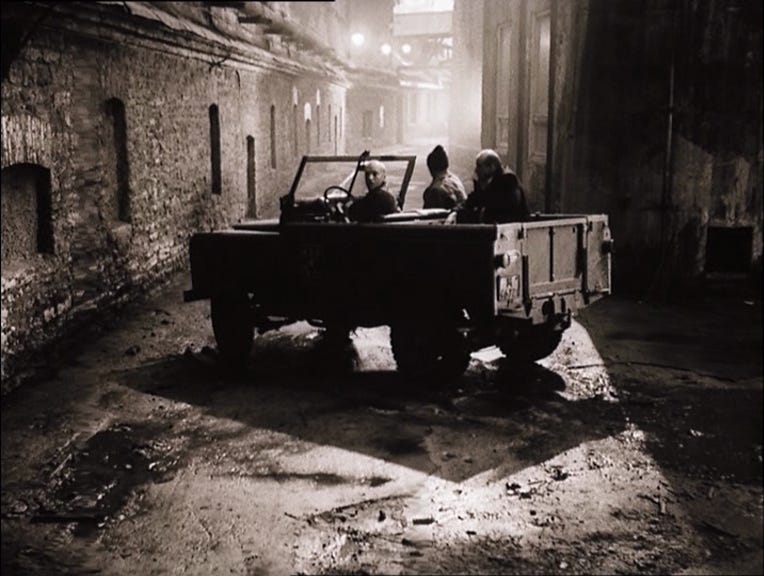
A short timeline of ideas linked to thinking about editing
I like to begin with three moments in film history that help students understand the power of an edit. There are countless approaches to explore, but these three are tangible and easy for students to emulate as they learn about the fundamentals.
Kuleshov showed that editing could suggest an idea through juxtaposition.
Eisenstein turned it into an argument of sorts, using montage to create conflict, designed to provoke thought.
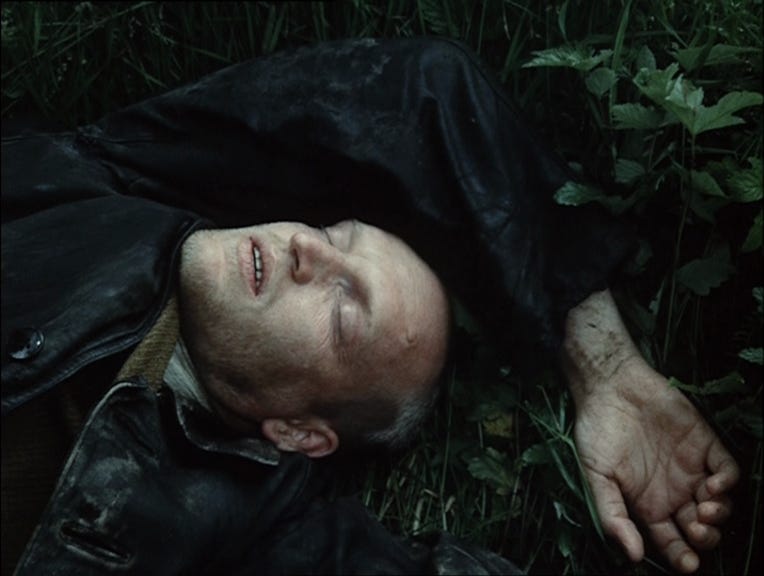
Tarkovsky utilised the long take to let time unfold and reveal its truth.
In short
Kuleshov implies
Eisenstein argues
Tarkovsky contemplates
These three approaches form a continuum between control and surrender, between shaping an audience’s response and allowing them to discover meaning for themselves.
Bringing this into the classroom
A Practical Exploration: One scene, Two edits
Here is a simple classroom exercise that helps students feel the ideology of editing.
Students edit the same short scene twice:
One version in the spirit of Eisenstein: Conflict, contrast, collision (Montage)
The other, inspired by Tarkovsky: Duration, rhythm, observation (Long take)
The Raw Scene
Give students a neutral, open scene. This can be found footage or something they have filmed themselves, but I find that using pre-existing material helps them make bolder choices, since they are less emotionally attached to it.
Keep the footage as neutral as possible to get the best results. Examples:
A person waiting at a train station.
Someone walking through a hallway and finding a letter.
The key is ambiguity; the footage should be simple enough that emotion and meaning depend entirely on how it’s edited.
Edit 1: Eisenstein Style “Cinema as Collision”
Goal: Construct meaning through contrast, rhythm, and association.
Encourage:
Rapid cuts and changes in scale (wide, close-up, extreme close-up)
Juxtaposition of opposites (e.g., calm face vs. rushing train)
Symbolic inserts (a clock ticking, an animal running, a storm)
Rhythmic cutting to intensify emotion or thought
Edit 2: Tarkovsky Style “Cinema as Duration”
Goal: Let time unfold naturally; find meaning in stillness and continuity.
Encourage:
Long takes, minimal cuts
Movement within the frame rather than between shots
Natural sound, silence, the texture of time (wind, footsteps, breathing)
Use of light to evoke atmosphere
Possible Discussion Points
Screen the two edits side by side or one after the other.
How did each version shape your understanding of the scene?
In what ways does the viewer’s role change — thinker or witness?
Which version feels truer to your own sense of cinema — and why?
Through this exercise, students learn that editing is not just technical; it is also ideological. Every cut (or refusal to cut) is a decision about how the audience will see, think, and believe.
Books
Film Form: Essays in Film Theory by Sergei Eisenstein
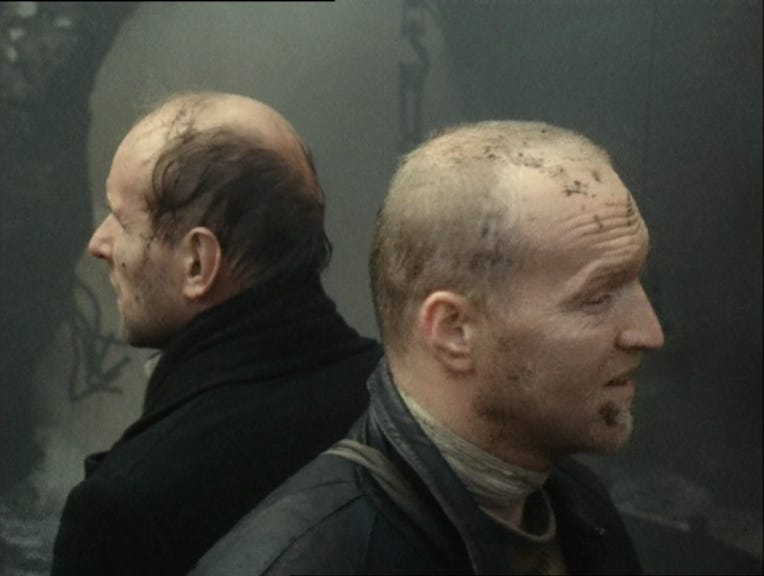
Sculpting in Time by Andrei Tarkovsky
Hey Sharon,
This piece reads like a love letter to the invisible craft that holds film together. You captured how editing is not just an end stage but a conversation between intention and discovery, control and surrender. I especially liked your framing of Kuleshov, Eisenstein, and Tarkovsky as points on a continuum rather than isolated ideas. It made the theory feel alive, like a rhythm filmmakers are still learning to play in their own ways.
As someone who works in film, I felt that line about editing being an ideological act hit deep. The way a single cut can shift belief, emotion, or even morality is something too many overlook. Your classroom exercise is elegant in its simplicity, and it reminds me why I first fell for the edit, the quiet power of shaping time itself. Keep teaching this way. You are showing students where the real storytelling happens.